Fire announces itself. It moves, sounds and draws the eye. But much of our most precise cooking happens after the visible flame has passed, when heat remains inside coal, stone and metal.
Residual heat is slower and more even. It asks the cook to pay attention to distance, time and the changing state of the hearth rather than simply increasing intensity.
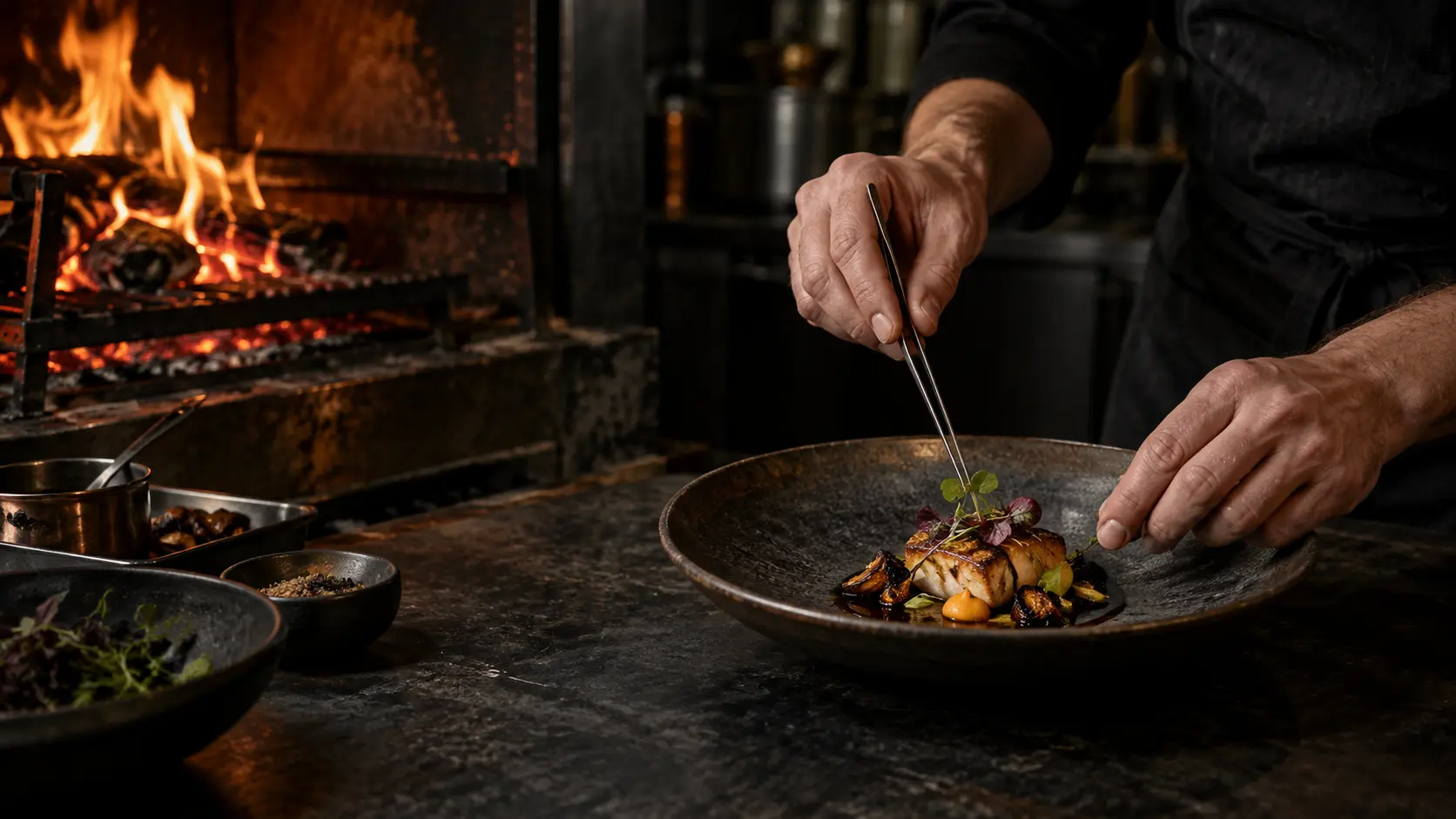
Reading the coal
Fresh charcoal gives strong radiant heat and volatile smoke. Later, its surface greys and the heat becomes stable. At the end, the bed looks almost dormant while still holding enough energy to cook roots for hours.
We map these stages throughout service. A course is assigned not only a preparation and temperature, but a moment in the life of the fire.
Flavor without performance
Smoke is powerful and easy to overstate. We look for traces that sharpen sweetness, bitterness or mineral character. If the first thing a guest tastes is smoke, the ingredient has usually disappeared.
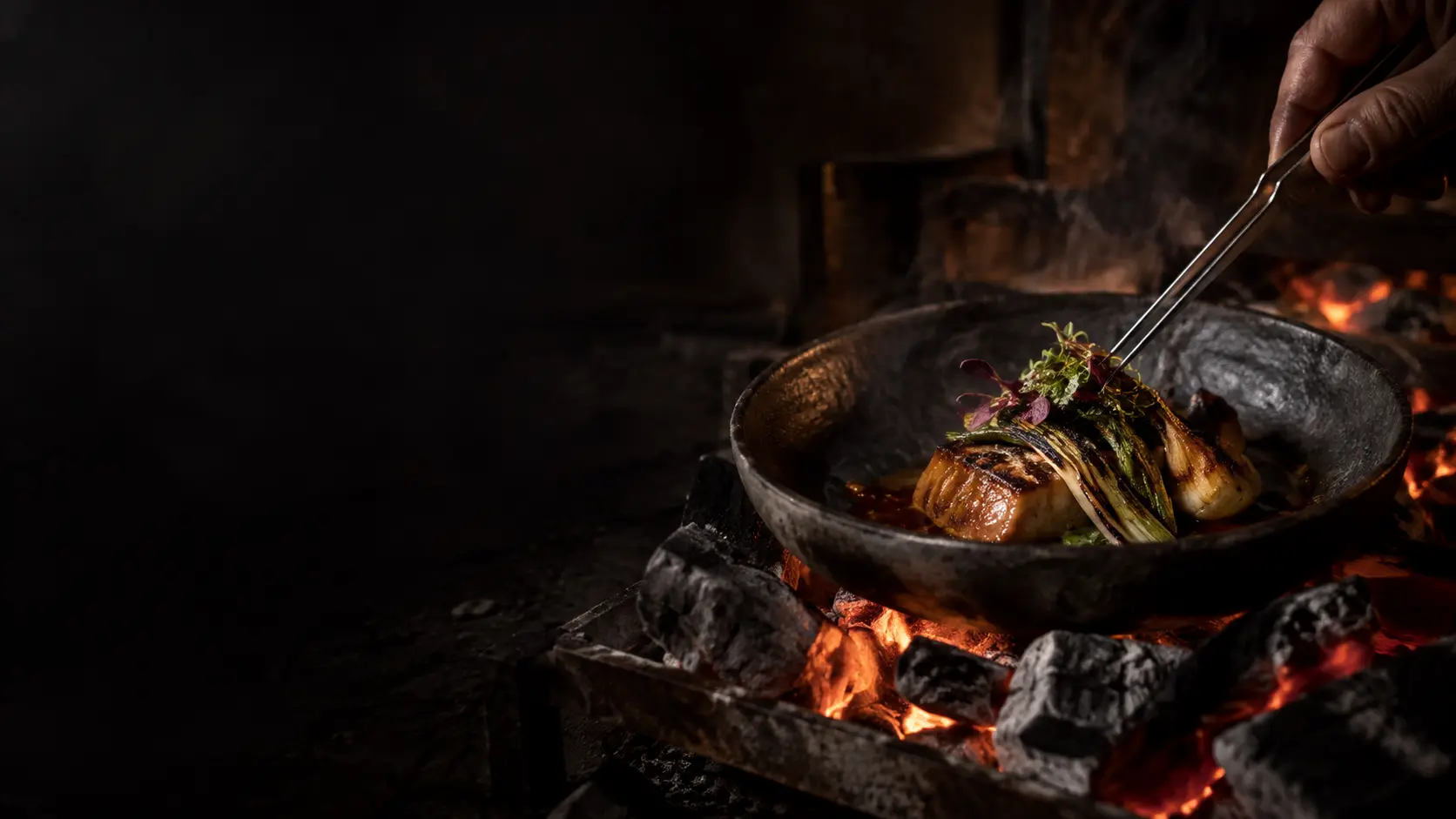
Using what remains
At the end of service, the hearth still holds energy. We use it to dry herbs, roast bones for the following day and slowly blacken fruit for vinegar. The fire continues working after the dining room empties.
Good cooking is often not about creating more heat. It is about noticing what is already there.